
by Eddie Leach
For many years, my photography has been dominated by sport. I have spent countless hours photographing movement, timing, tension and decisive moments, always looking for that fraction of a second when everything comes together.
Recently, however, I have found myself wanting to explore something completely different.
I have started a new portrait project.
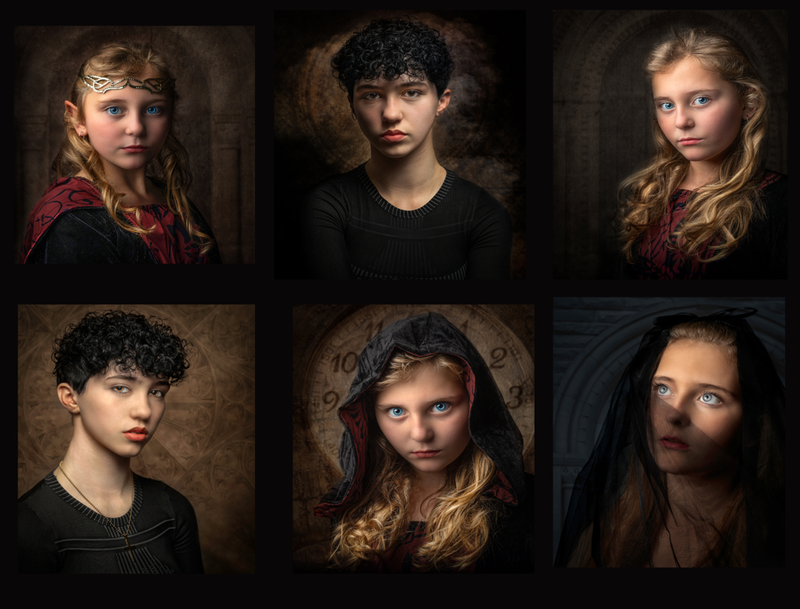
At first glance, that might not sound particularly revolutionary. Portrait photography is something many photographers explore, and there is certainly no shortage of beautifully lit portraits. But I am not interested in simply producing attractive portraits. My aim is to create powerful portraits with a sense of character, atmosphere and narrative.
Creating Characters
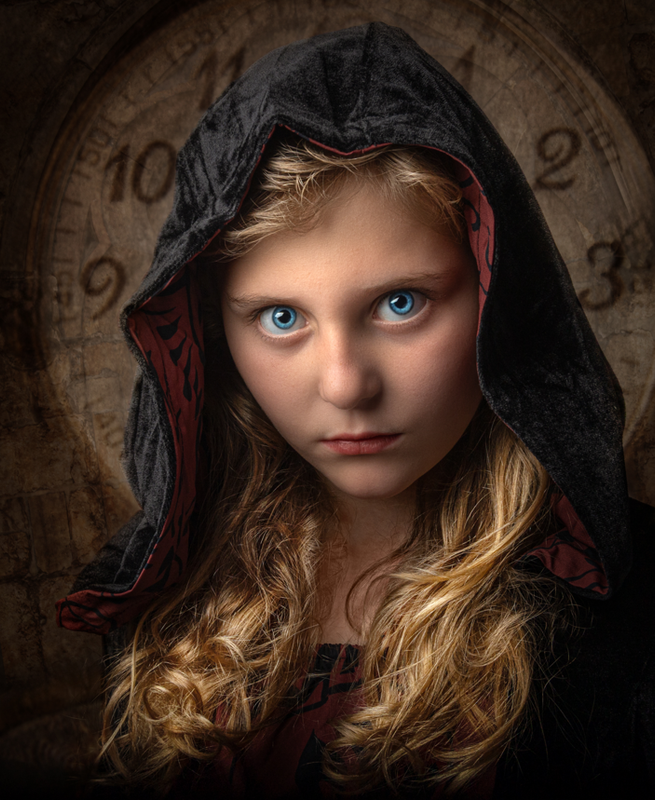
I want the viewer to look at an image and wonder who this person is.
What has happened to them?
What are they thinking?
And perhaps most importantly, what is the story behind the photograph?
Looking beyond the face
The face is obviously central to a portrait, but for me it is only the beginning.
I have become increasingly interested in the relationship between the subject, the lighting, the background, clothing, gesture and symbolism. Every element has to contribute something to the final image. This has led me towards a style that is heavily influenced by the Old Masters.
I want the viewer to look at an image and wonder who this person is.
What has happened to them?
What are they thinking?
And perhaps most importantly, what is the story behind the photograph?
There is a reason for that darkness
I have always had an interest in art history, particularly artists such as Caravaggio, Rembrandt and Rubens. Their paintings have an extraordinary ability to make a face emerge from darkness. Light isn’t simply used to illuminate the subject; it becomes part of the story.
That is something I am trying to bring into my photography.
The backgrounds are deliberately dark and textured. The lighting is controlled and directional. I want the eyes to become an important focal point, while allowing parts of the face and clothing to disappear into shadow.
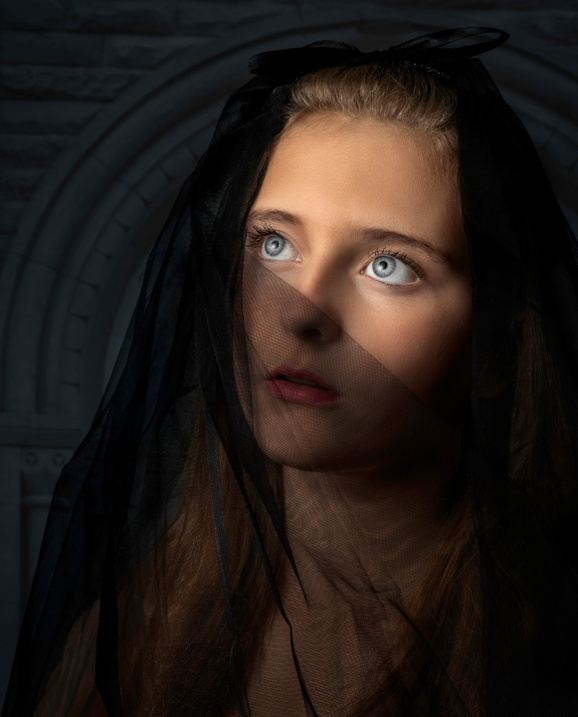
I don’t want to show everything.
If everything is explained immediately, there is very little left for the viewer to discover.
The biggest change for me has been thinking of the people in front of the camera not simply as models, but as characters.
The clothing, accessories and styling are carefully considered. A simple piece of jewellery, a hood, a veil or an unusual headpiece can completely change the interpretation of a portrait.
One image might suggest innocence.
Another might suggest strength.
Another may leave the viewer wondering whether the character is vulnerable, mysterious or even slightly threatening.
That ambiguity is intentional.
I want my portraits to have enough information to create a story, but not so much information that the story becomes obvious. The viewer should be able to bring something of their own imagination to the photograph.
The Eyes
One of the most important elements throughout this project is the eyes.
I am deliberately creating portraits where the eyes have a powerful presence. They are often the first thing I notice when I look at a finished image, and I want them to hold the viewer’s attention.
There is something fascinating about the eyes in a portrait. A person can remain completely still, yet the eyes can suggest an entire narrative.
That is particularly important when working with younger subjects.
There can be an extraordinary contrast between youthful innocence and the much darker, more historical atmosphere surrounding them. The face tells us one thing, while the lighting, costume and setting can suggest something entirely different.
That tension is something I want to explore further.
Building the image
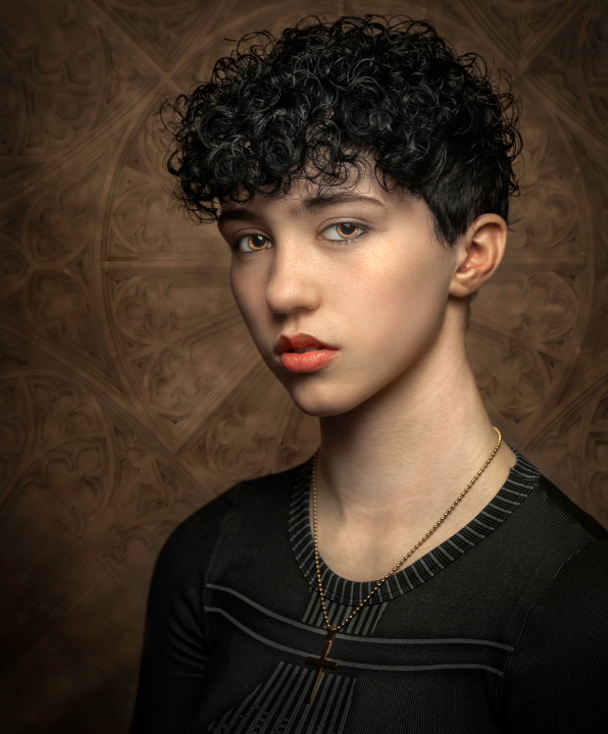
Although these portraits may look quite traditional, there is a considerable amount of thought that goes into constructing them.
Composition is just as important to me in portraiture as it is in my sports photography.
I am constantly looking at the position of the head, the direction of the eyes, the shape created by the hair and clothing, the relationship between light and shadow, and the way the background can frame the subject.
In some of the images I have also introduced circular forms and architectural elements behind the subject. These aren’t simply decorative backgrounds. They are there to create a visual framework around the face.
I am interested in using lines, shapes and repetition to guide the viewer’s eye.
For me the photograph therefore has to work on two levels. It has to work emotionally, but it also has to work compositionally.
From Sport to Portraiture
Interestingly, I don’t think my years photographing sport are as far removed from this project as they might initially appear.
Sports photography has taught me to look for the decisive moment.
Portrait photography requires me to find a different kind of decisive moment.
In sport, it might be the instant a gymnast reaches maximum extension, a boxer lands a punch or an athlete clears a hurdle.
In portraiture, the decisive moment can be much quieter.
It might be a change in expression.
A slight movement of the eyes.
The position of the head.
A moment when the subject suddenly becomes the character I am looking for.
The challenge is simply different.
Instead of capturing movement, I am trying to capture presence.
Where the Project is Going
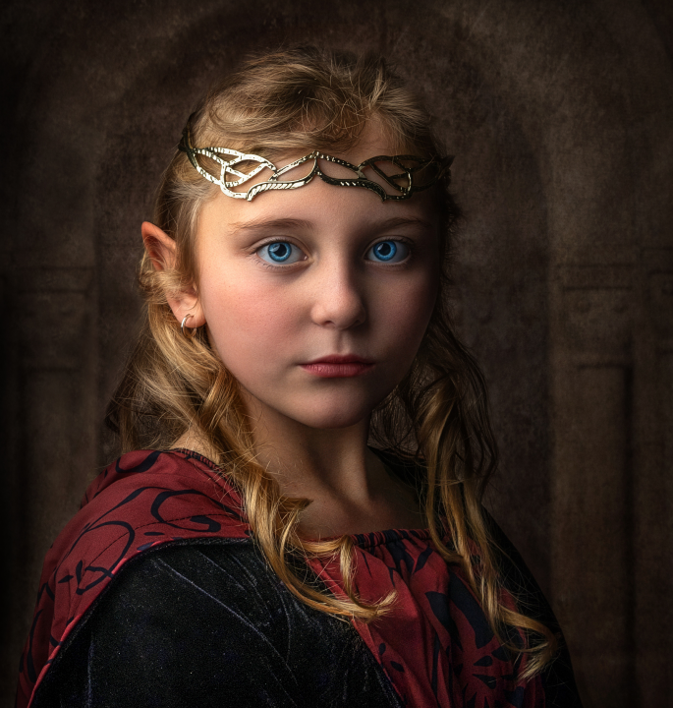
This is still very much a work in progress.
The portraits shown here are part of an ongoing experiment as I try to discover exactly where I want this style of portraiture to take me.
I don’t want to simply reproduce the same lighting and background over and over again. The next stage will be about developing the ideas further — introducing stronger symbolism, more deliberate storytelling and perhaps creating portraits that feel almost like individual scenes from a much larger narrative.
Ultimately, I want to create portraits that could stand on their own as pieces of art.
Not simply photographs of people.
Not simply technically accomplished portraits.
But images that make the viewer pause.
Images that create questions.
Images where the longer you look, the more you begin to see. That is the direction I am now taking with my portrait photography. I want to move beyond photographing the person and start photographing the story.